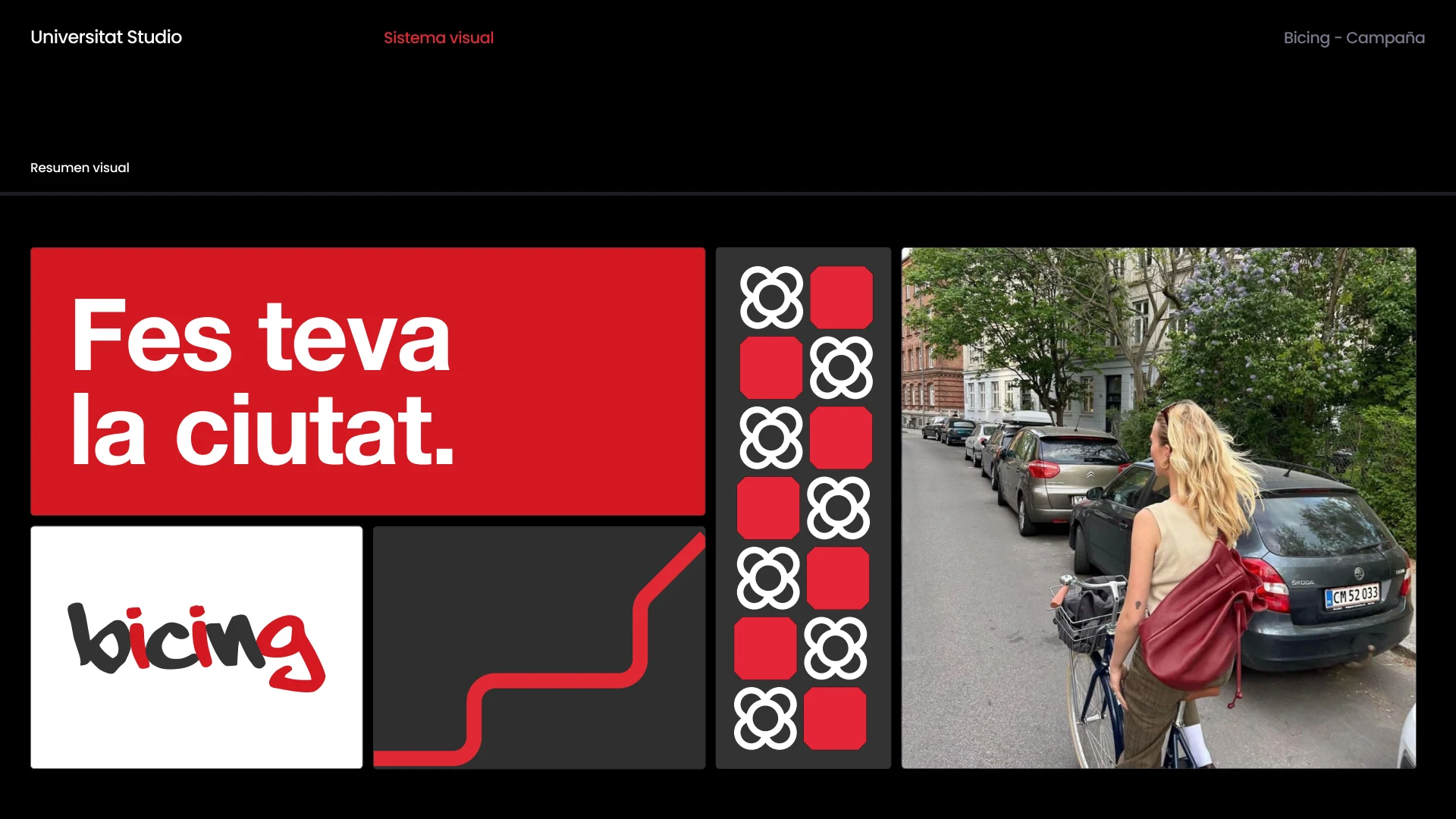
Bicing.Fes teva la ciutat.
Brand and campaign exploration for the Art Direction course at BAU, College of Arts and Design of Barcelona.
Bicing is close to gender parity, but Barcelona's bike lanes are not. This campaign connects the journeys women already make with the cycling network.
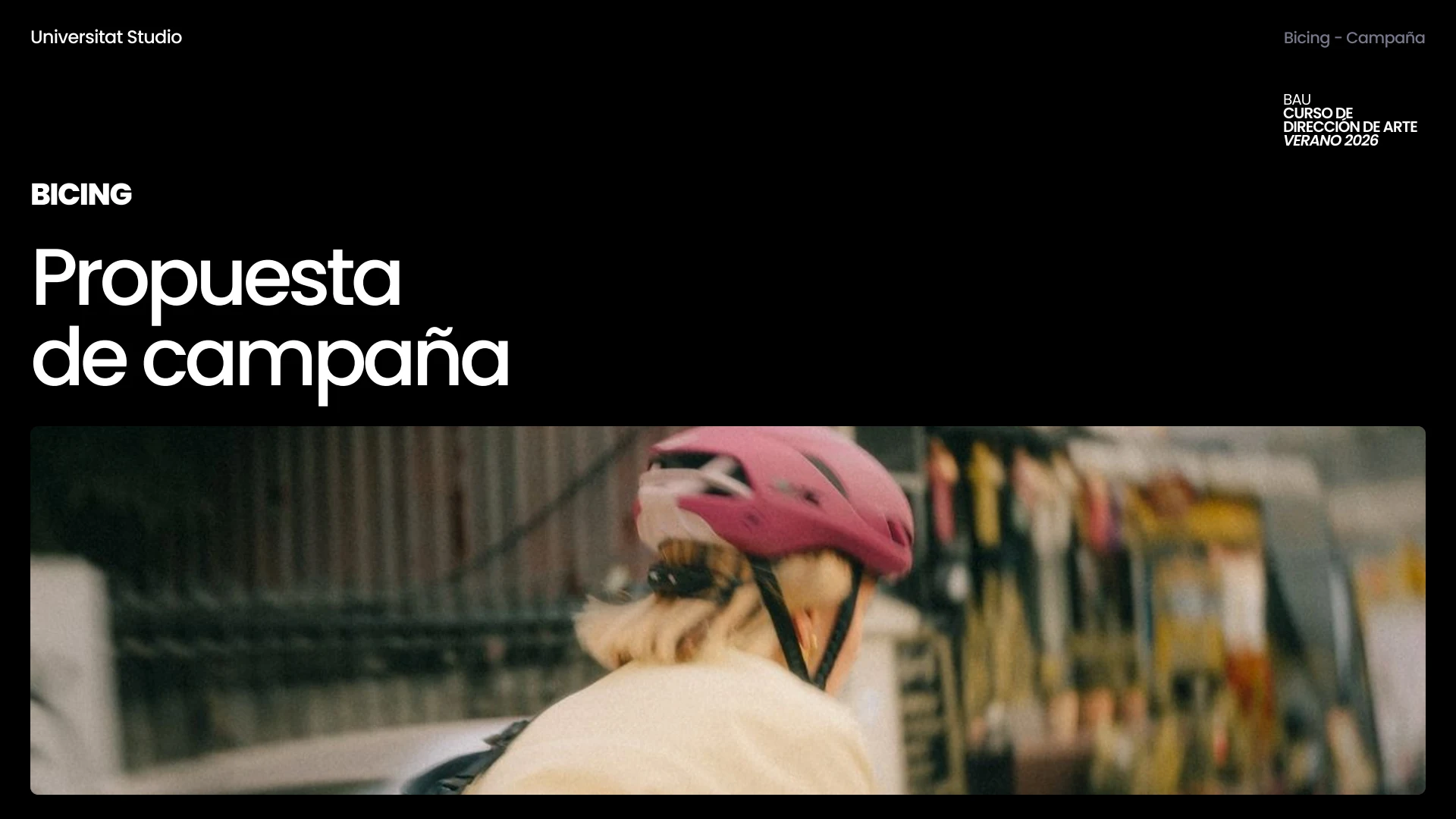
Fes teva la ciutat.
Make the city yours.
Selected campaign applications
Barcelona’s bike lanes are losing women.
Women made up 30.7% of observed cycle-lane users in 2025. In 2021, the figure was 35.6%.
Women also make up 68% of bus passengers and 60% of metro passengers. They already cross the city every day.
One 2023 BACC cycling-profile sample split 72/28. A 2020 Bicing user survey split 53.8/46.2. The public service is much closer to parity.
Sources: BACC 2025 · BACC cycling profiles, 2023 · Bicing user survey, 2020 · Barcelona mobility bulletin, 2024
They don’t reject the bicycle. They reject the cyclist stereotype around it.
The L5 user
She is 25 to 44 and lives, works or studies inside the Bicing service area. She knows how to ride.
Her day includes home, work, the pool, her mother's place and dinner. At half past six, her plans change.
The L5 can't follow her day. Bicing can.
- Home
- Work
- Gym
- Relationships
- Family
- Health
- Fun
Her day does not fit on one line.
Don't make her a cyclist. Put Bicing inside the day she already has.
Win the awkward legs. The transfer, the detour, the change of plan.
Make it ordinary. Put Bicing beside the bus and metro—not in a separate “cyclist” category.
One city. Many routes.
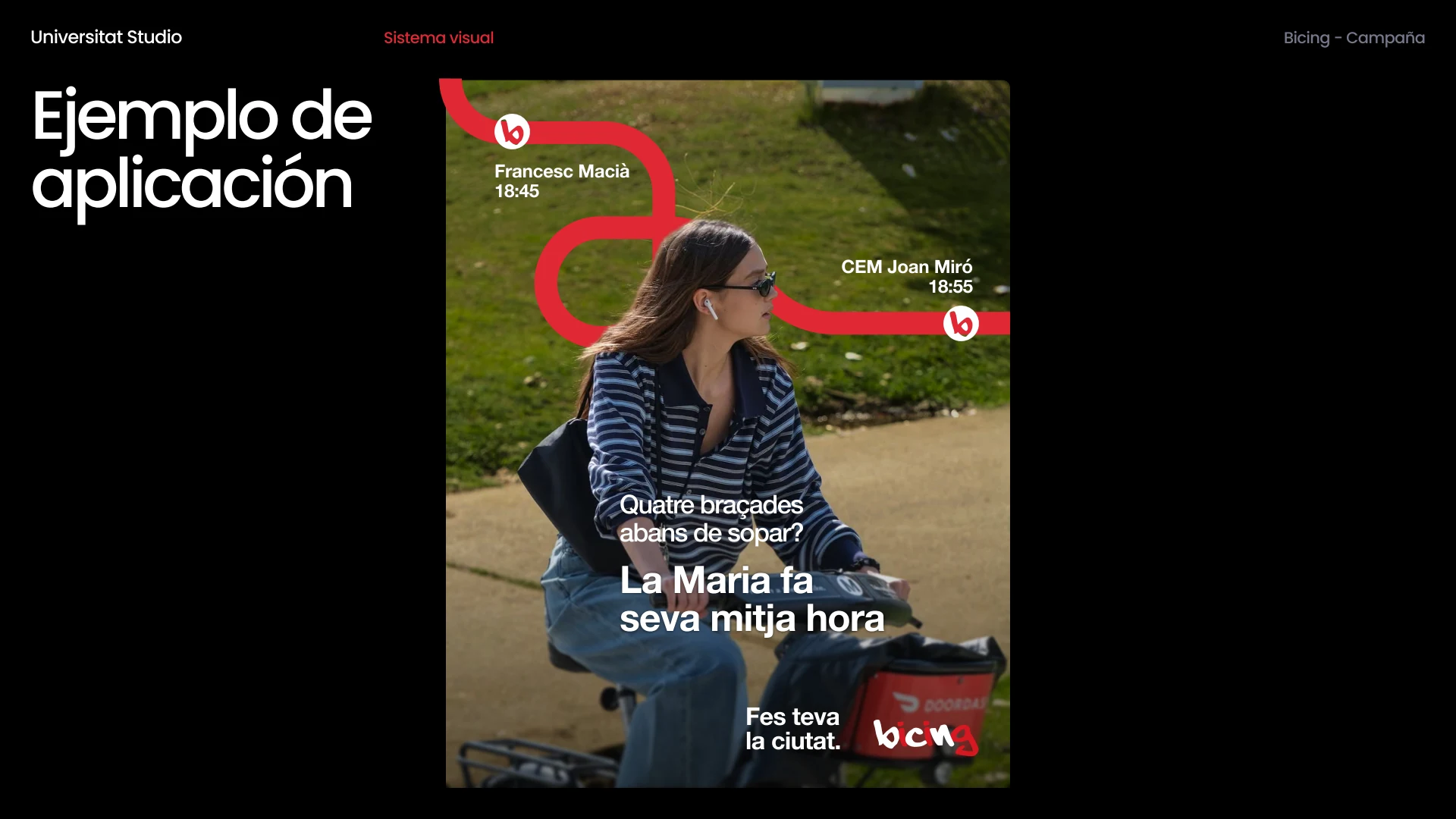
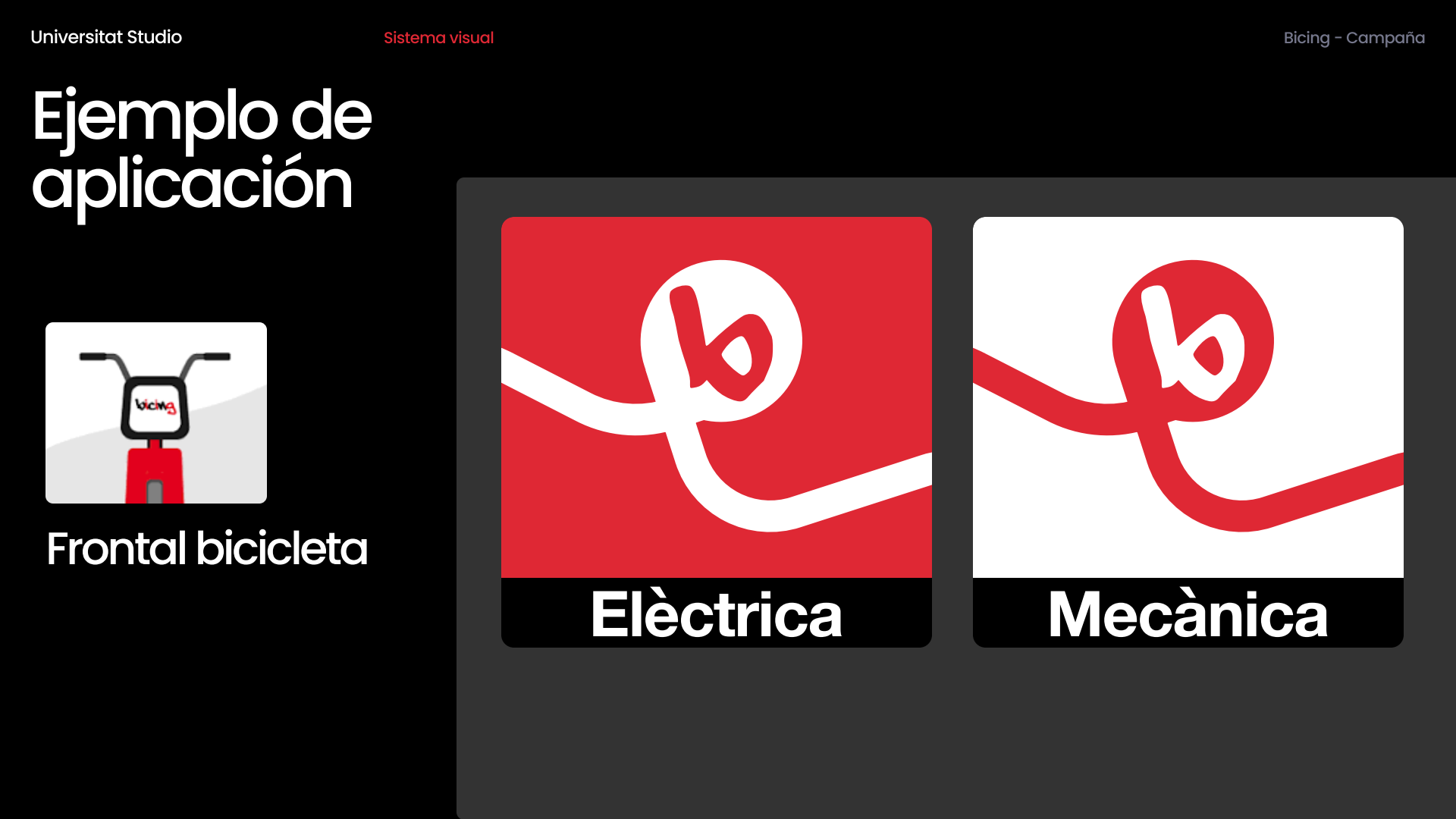
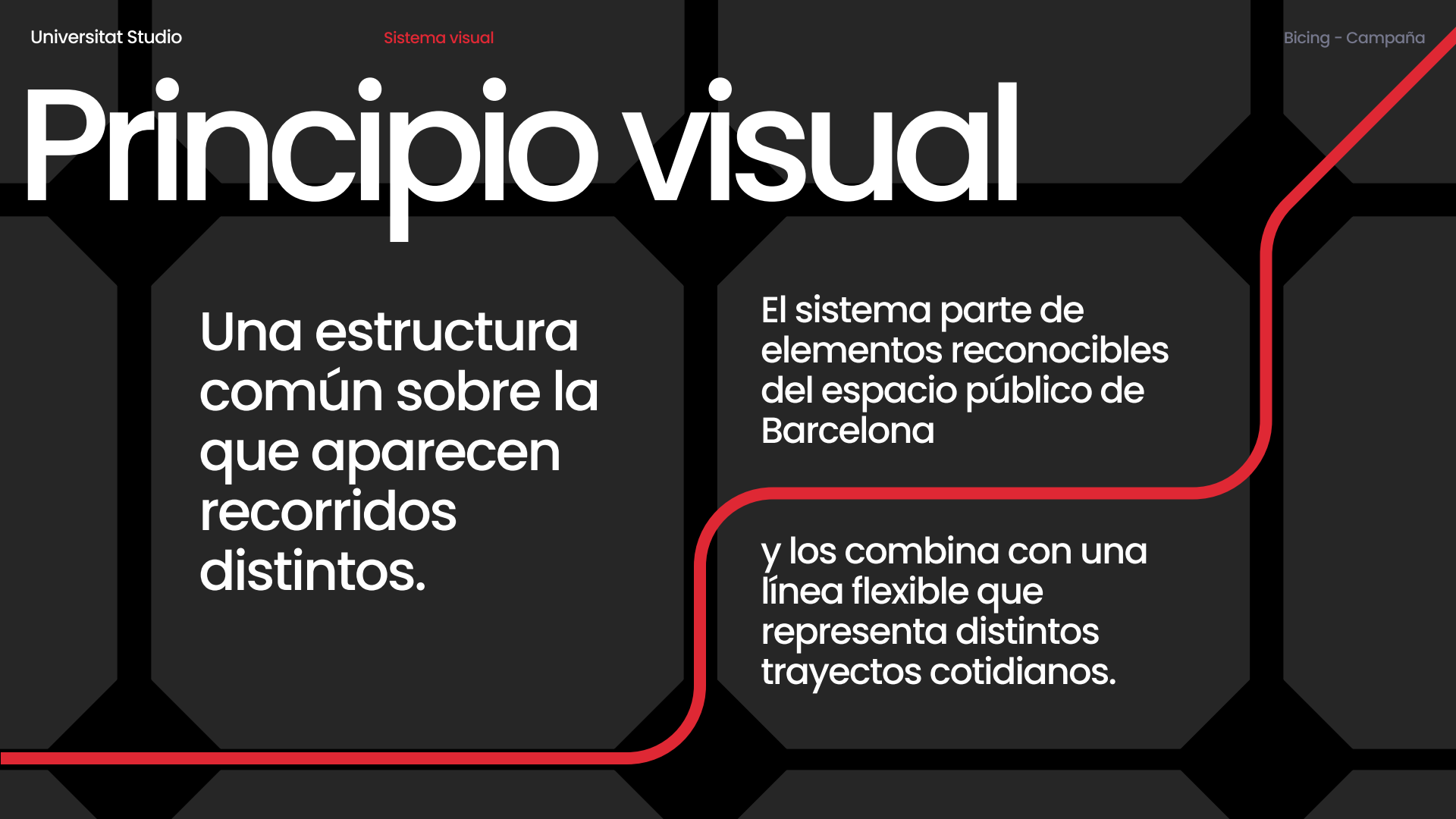
The module comes from the Bicing mark and repeats like an Eixample block. Your route cuts through the grid in red, making the city yours.
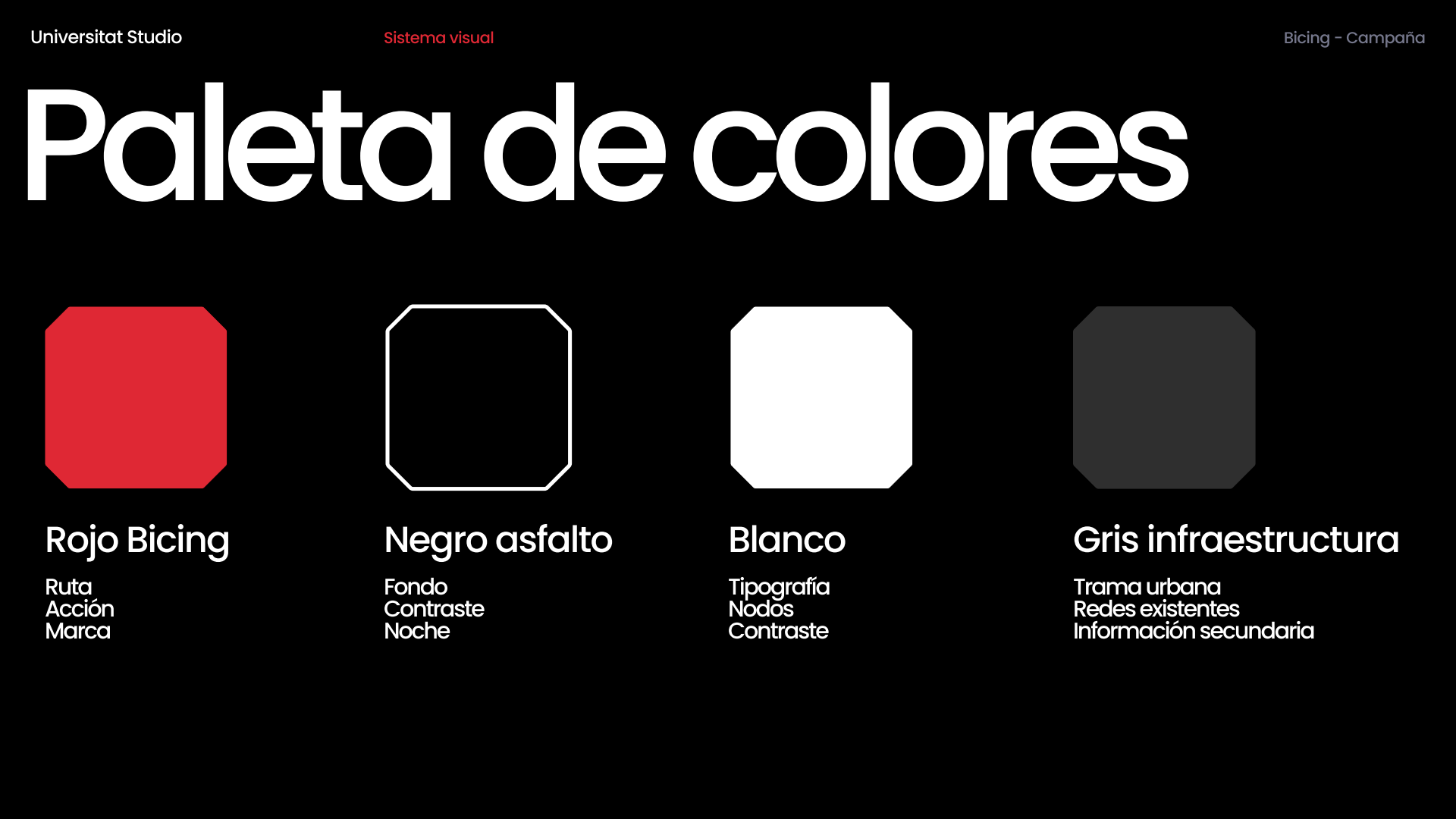
The line carries the route. Everything else stays asphalt black, white or infrastructure grey.
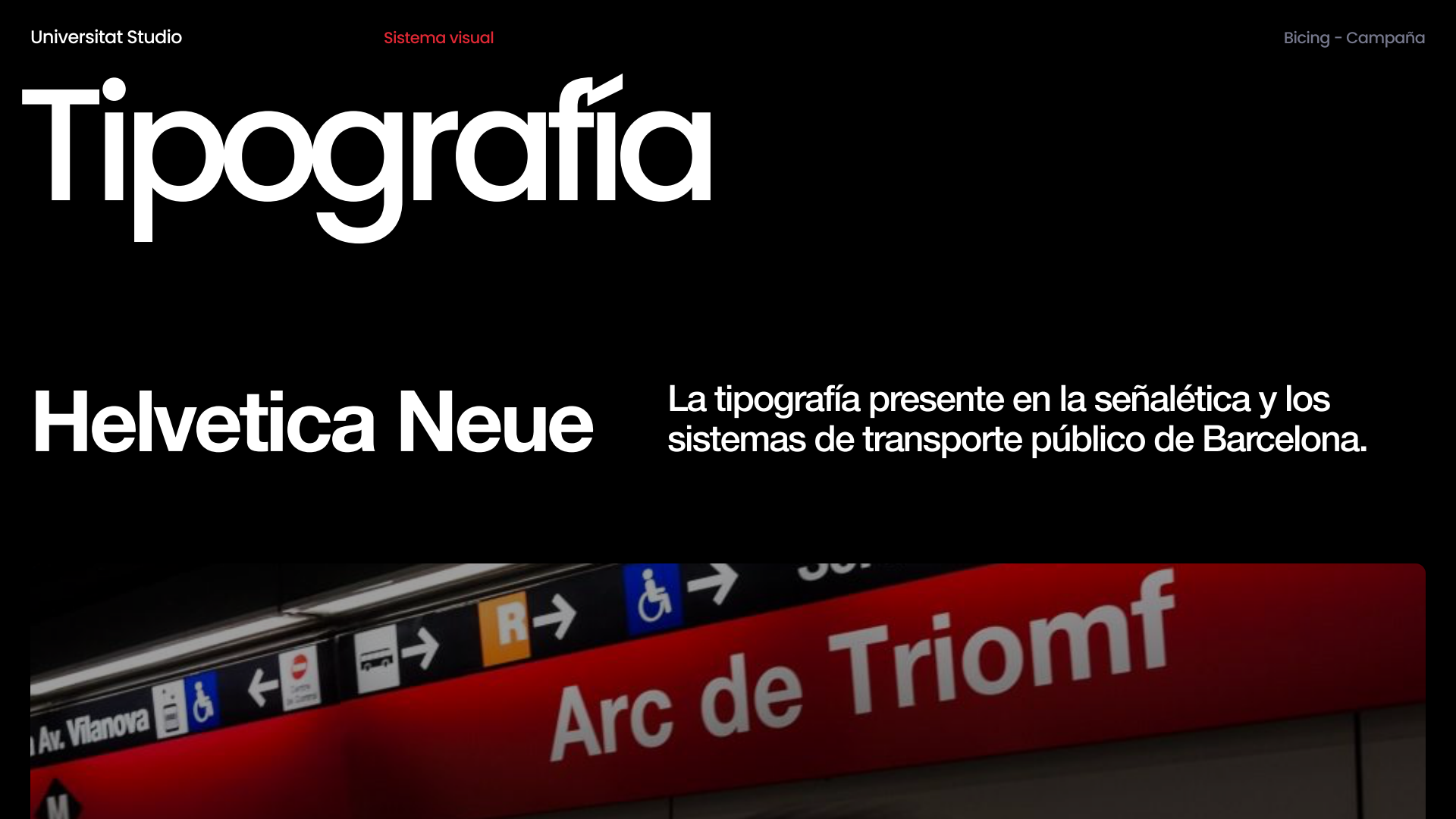
Helvetica Neue already speaks through Barcelona's signage. Bold carries claims. Regular handles station names and times.
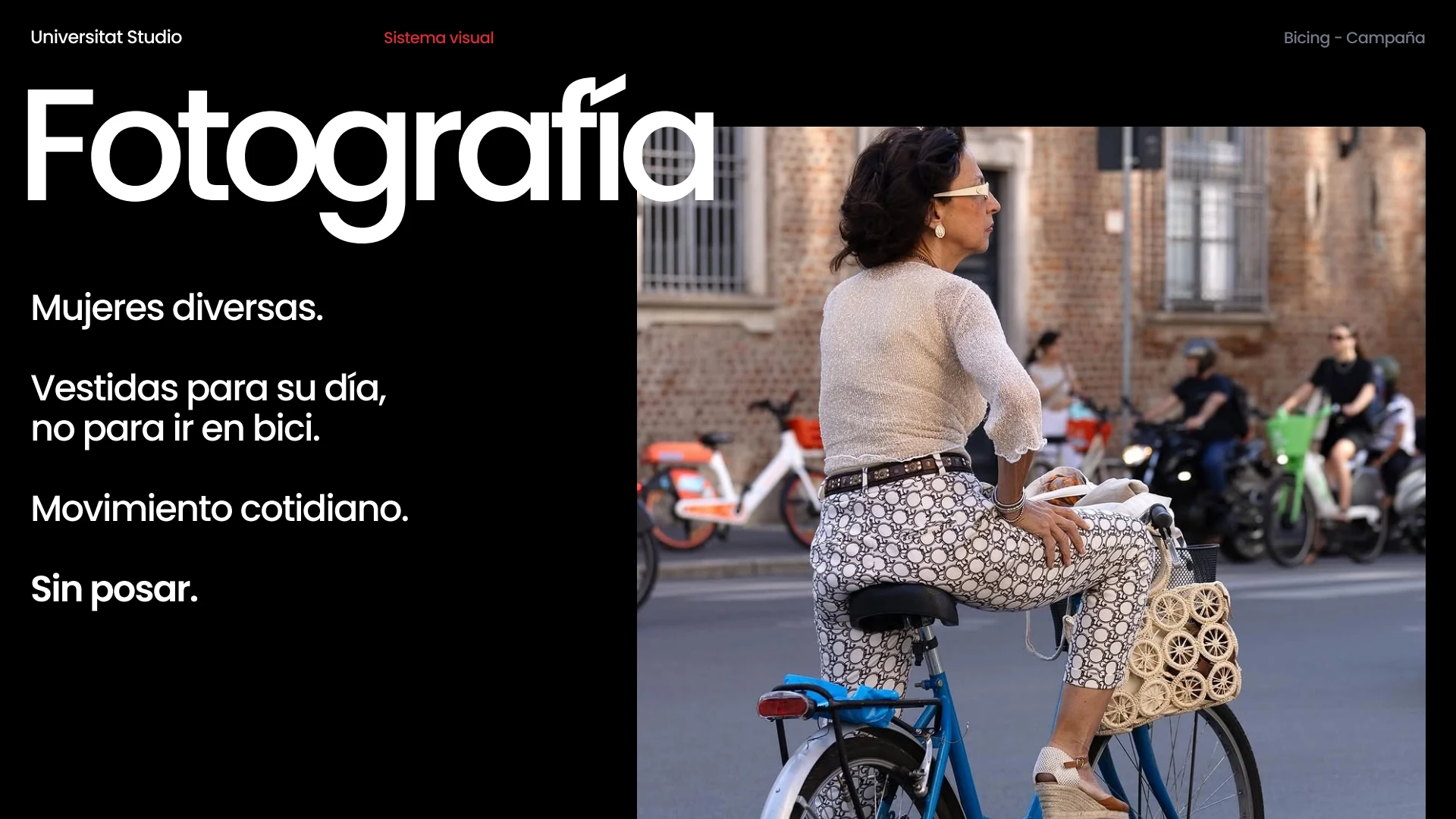
Everyday movement, no costume.
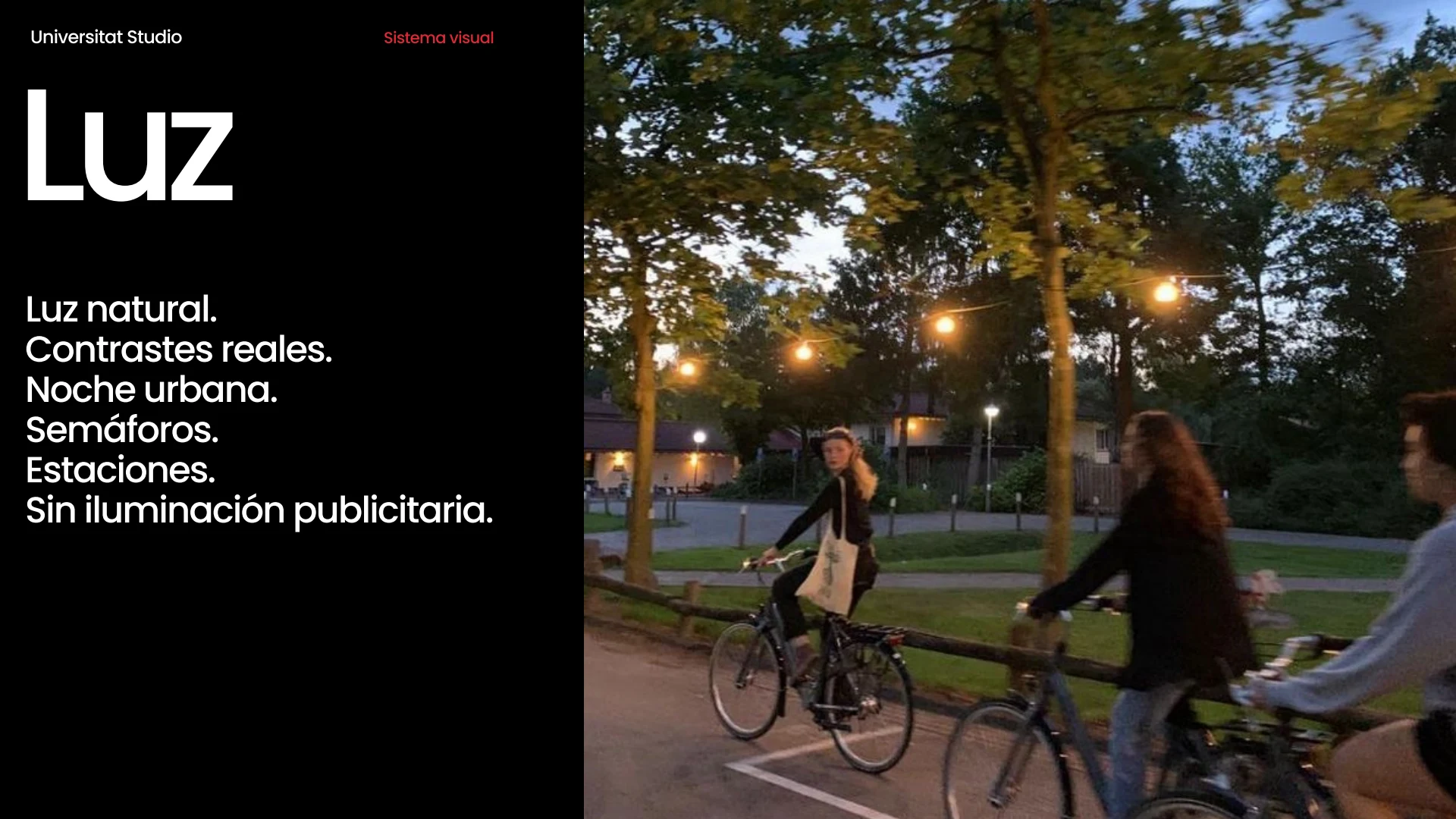
Women are dressed for where they're going. Natural light, real contrast, traffic lights, stations and night.
No posing or eye contact. The bicycle stays a tool and never becomes the subject.
The reference frames below are placeholders. The proposed shoot would take place in Barcelona.
- Mitja hora.
- Half an hour.
- El camí de tornada.
- The way back.
- Avui, pel parc.
- Today, through the park.
- Has canviat de plans.
- You’ve changed plans.
- Encara hi ets a temps.
- There’s still time.
Where I’d take it next
This was a two-week course project, so there are no campaign results behind it. Three questions still need answers.
- Can the station-and-time format be understood in the two seconds people give a bus-shelter poster?
- Bus, metro and Bicing all lead with red. Does the campaign need a secondary colour to remain recognisably Bicing?
- Is this enough to put Bicing alongside bus and metro in the audience's everyday choices?