Fes teva la ciutat.Make the city yours.
Brand and campaign exploration for the Art Direction course at BAU, College of Arts and Design of Barcelona.
A campaign for Barcelona's public bikes. Women are the majority on the city's buses and metro, and a shrinking minority in its bike lanes. On Bicing the gap is already much smaller, and that is what the campaign builds on.
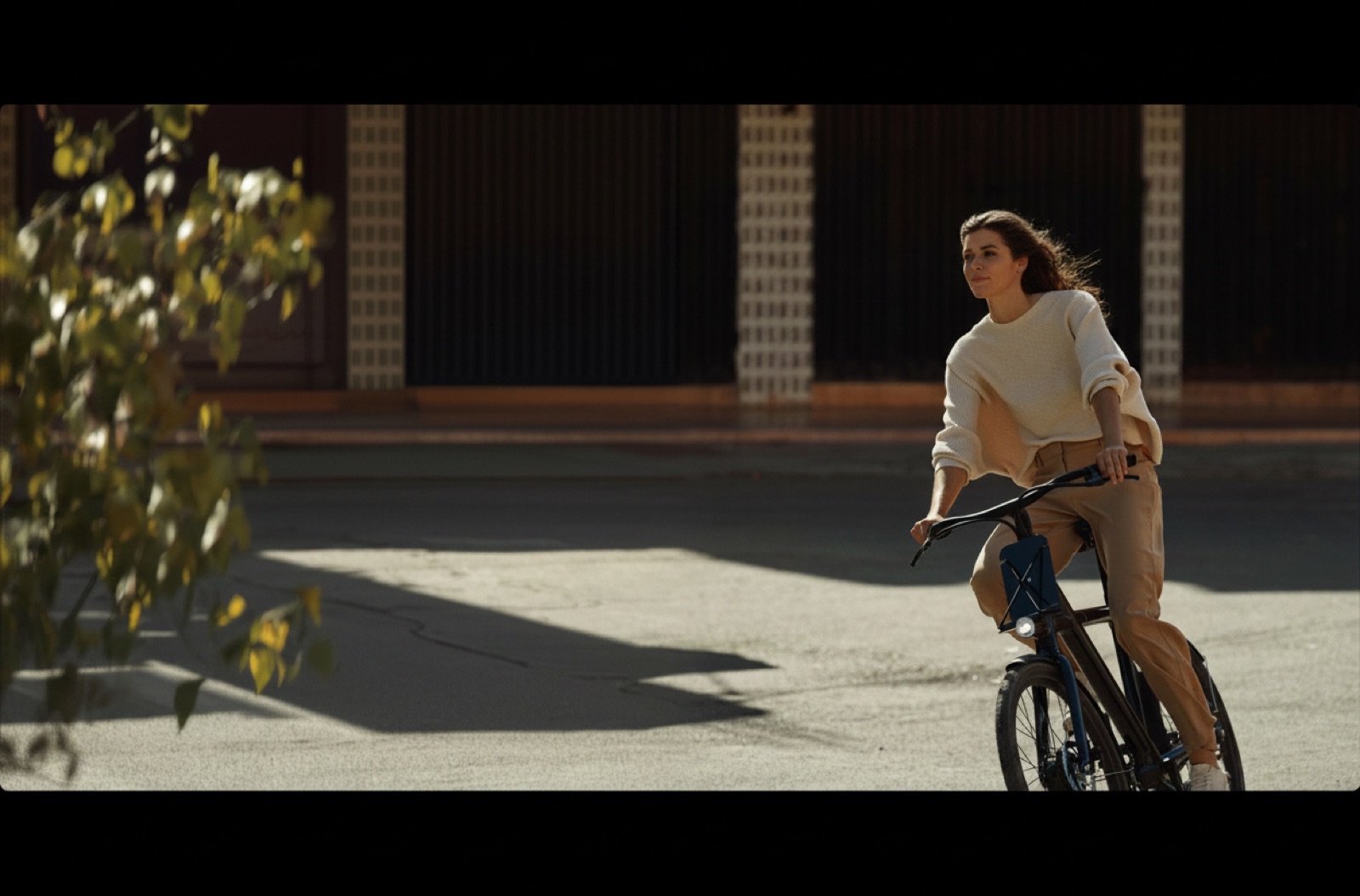
The gap is not where you would expect it
Bicing is Barcelona's public bike-sharing service. The brief was open: pick a brand, propose a campaign, defend it in two weeks.
Three numbers sit oddly together. Women are the majority of people crossing Barcelona on public transport. They are a shrinking minority in the bike lane. But on Bicing specifically, the gap is much smaller than it is on privately owned bikes.
- 30.7% of people counted cycling in Barcelona in 2025 were women, five points below 2021
- 56 / 67% of metro and bus trips in the city are made by women
- 72/28 → 54/46 men to women on private bikes, against Bicing users
Sources: BACC, baròmetre de la bici 2025 · EMEF / IERMB, encuesta de movilidad · B:SM / Bicing, user data 2025.
She already crosses the city, on fixed lines
Two thirds of bus trips and more than half of metro trips in Barcelona are made by women. The mobility is already there. What is missing is the freedom to choose the route rather than follow one.

The network she already rides, and the fixed lines it holds her to.
What the audience is actually turning down
The gap is not about skill or willingness. Most of the women in the research already know how to ride. What they turn down is everything attached to it: the gear, the clothes, the posture, the idea that using a bike means becoming a cyclist.
That is also why the public bike matters. You do not have to own it, store it, maintain it or identify with it. You take one, you leave it.
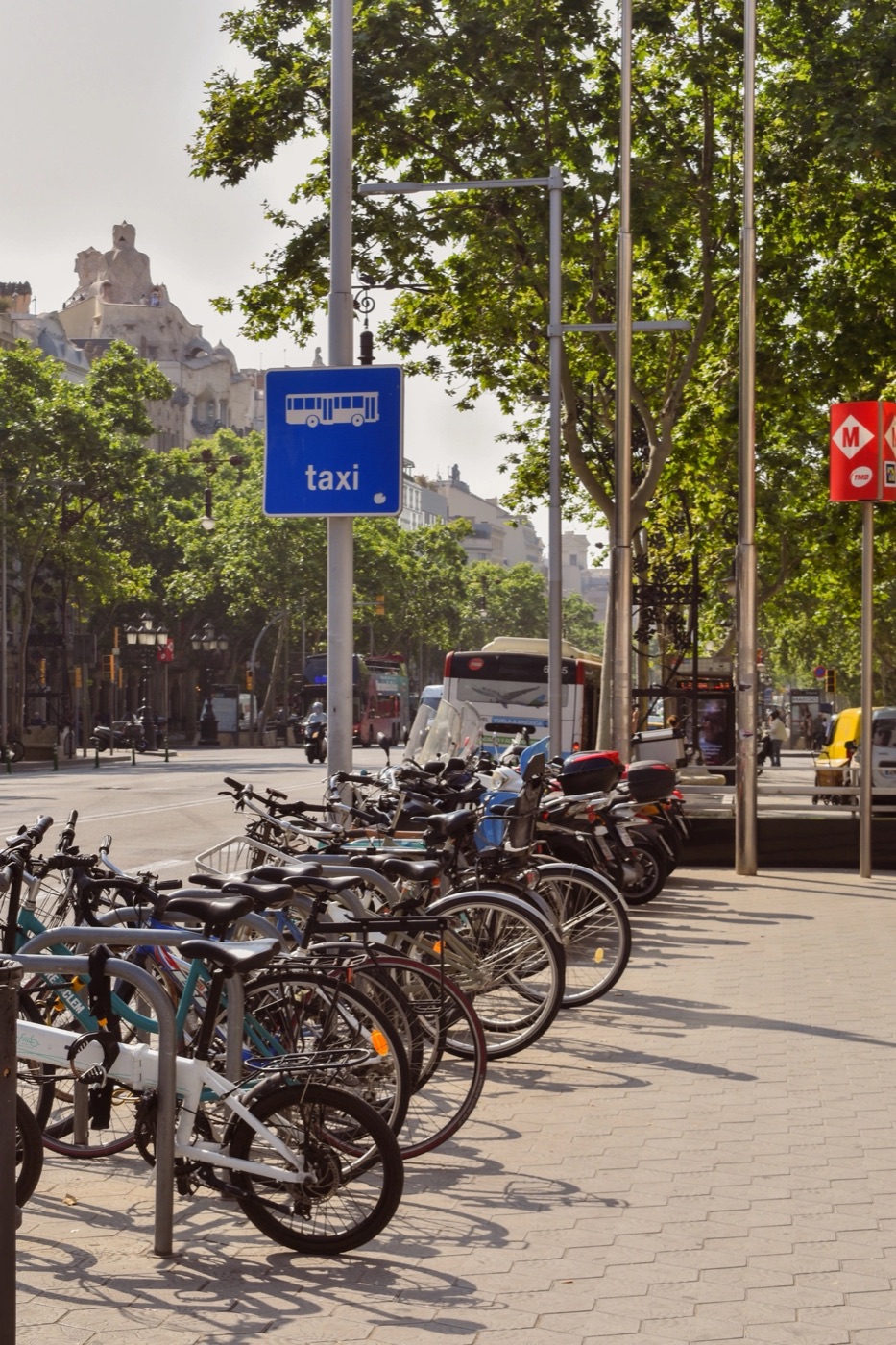
They do not reject the bicycle. They reject having to become cyclists in order to use it.
The L5 rider
She is 25 to 44. She lives, works or studies inside the Bicing service area. She already moves around the city and she knows how to ride. She does not think of herself as a cyclist.
Her day is not a line. It is the gym, a café, the school run, someone's family, a film, the beach, and a plan that moves at half past six. Today she fits her route to the transport available. Bicing can fit itself to her route instead.
- Club
- Café
- Gym
- Home
- Family
- School
- Movies
- Beach
One line, redrawn for every journey. It never holds the same shape twice.
Do not turn her into a cyclist. Fit Bicing into the day she already has.
Win the regular trips, and the changes of plan.
Make Bicing one more ordinary way of crossing Barcelona, not an activity reserved for people who call themselves cyclists.
A system borrowed from the street
Barcelona already has a visual language for getting around: the signage, the roundels, Helvetica Neue on red. A new one would put Bicing in competition with the modes it should be sitting next to. So the system borrows instead of inventing.
Four elements. The module comes from the Bicing mark. The grid repeats at the rhythm of an Eixample block, chamfered corners and streets included. The station is the service as it appears in the street. The red line is the route, and it changes shape every time.
Four elements, and the line that carries between them.
Colour and type do the sorting
Red is reserved for the route and for anything belonging to Bicing. Everything else stays asphalt black, white and infrastructure grey, so the route is always the thing that reads first.
Helvetica Neue is already the typeface of Barcelona's transport signage. Bold carries the claims, regular carries station names and times. Nothing here needs to be invented for the campaign to look like it belongs.
Photography without the costume
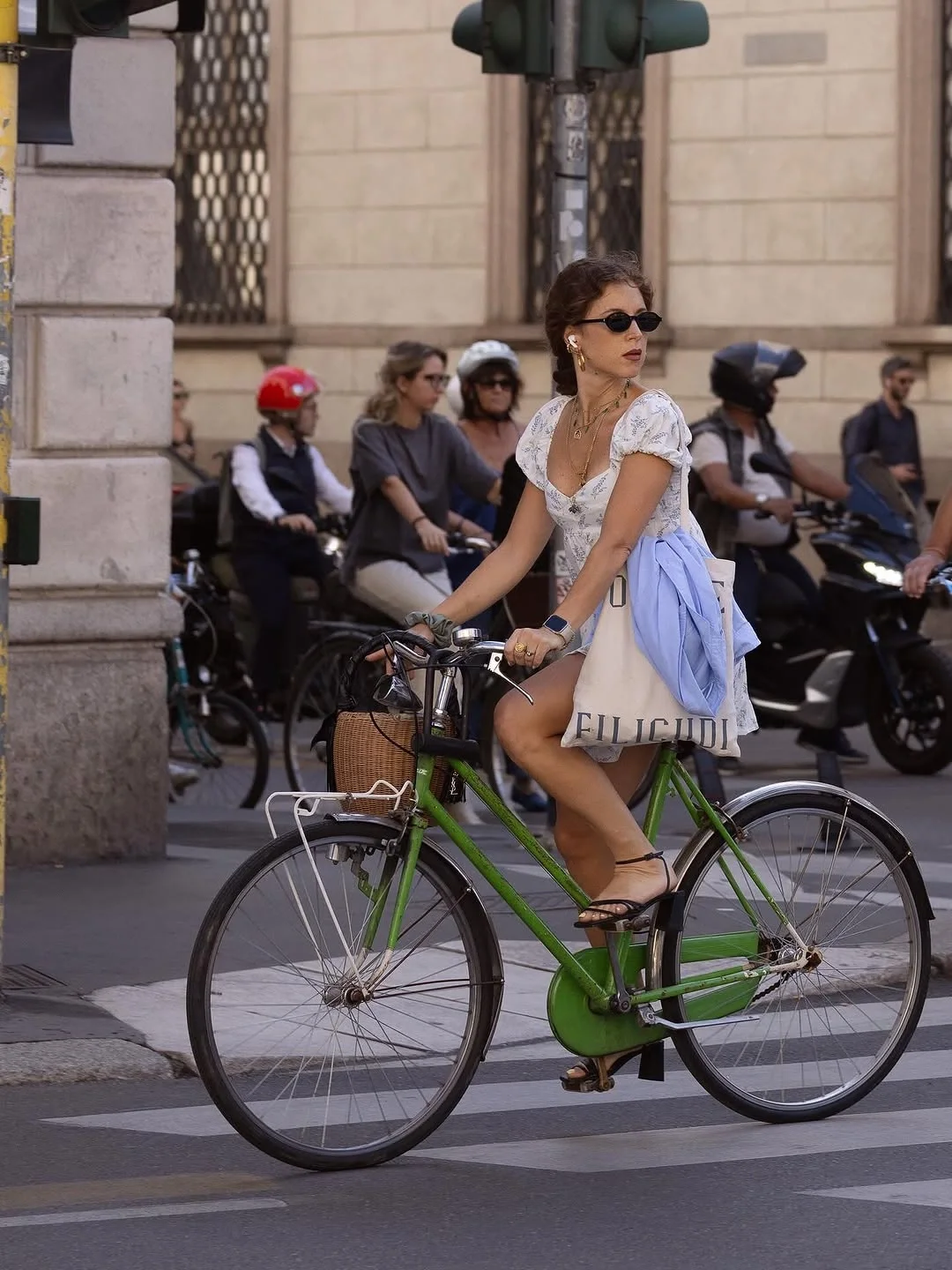
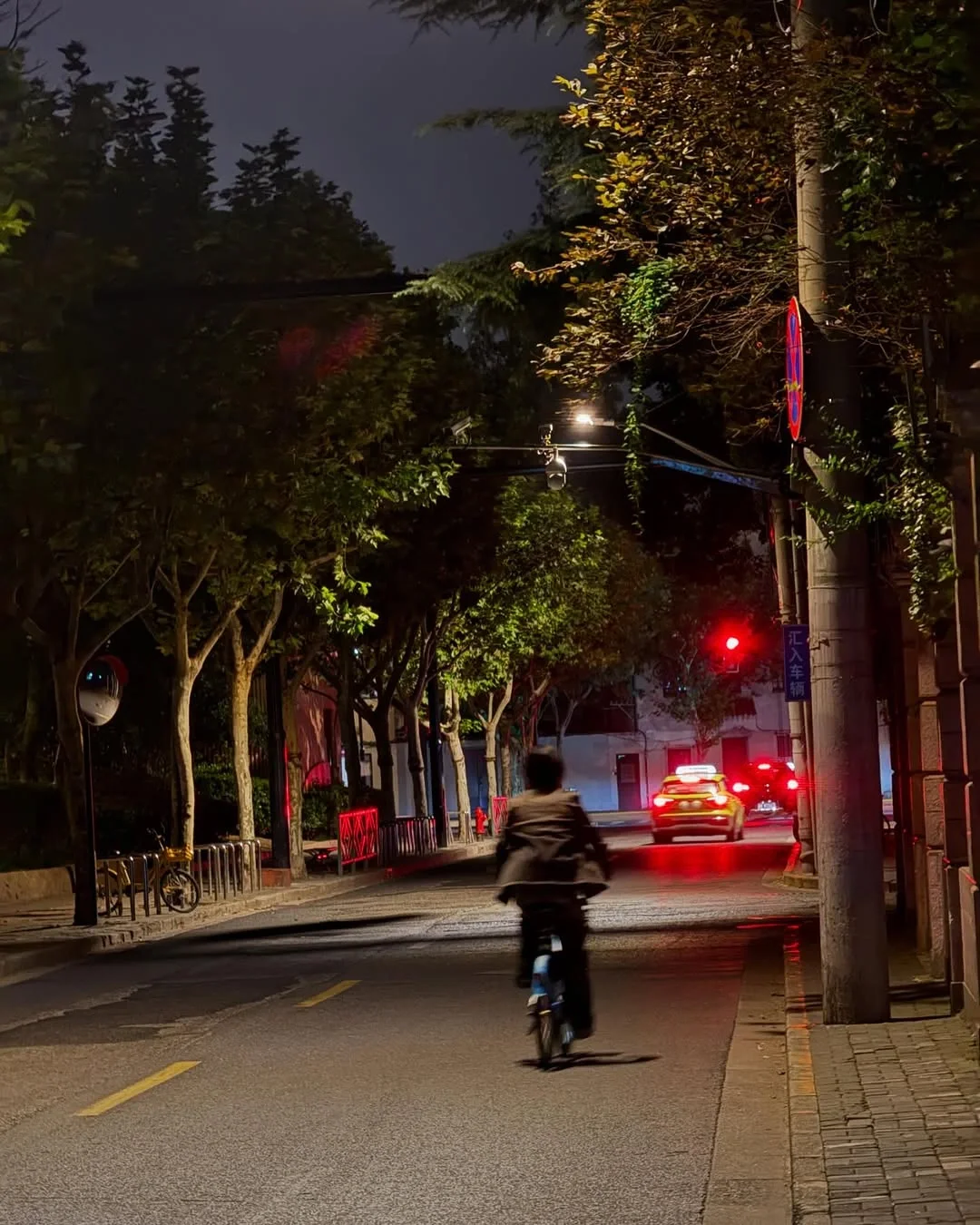
Women dressed for where they are going, not for a ride. Natural light and real contrast, including traffic lights, stations and night. No posing, no eye contact, no hero framing. The bicycle stays a tool and never becomes the subject.
The shoot would take place in Barcelona, across a full day rather than a golden hour.
Copy that describes a moment, not a benefit
The lines stay in Catalan, stay short, and read closer to a notification than a slogan. They talk about time and small decisions. The claim closes the idea rather than explaining it.
- Mitja hora.
- Half an hour.
- El camí de tornada.
- The way back.
- Avui, pel parc.
- Today, through the park.
- Has canviat de plans.
- You have changed your plans.
- Encara hi ets a temps.
- You are still in time.
Applications
The poster names the two stops and the time of the trip it belongs to, so the route on the image is a specific journey rather than decoration. The same system runs on the front panel of the bikes, where the rider chooses between electric and mechanical.
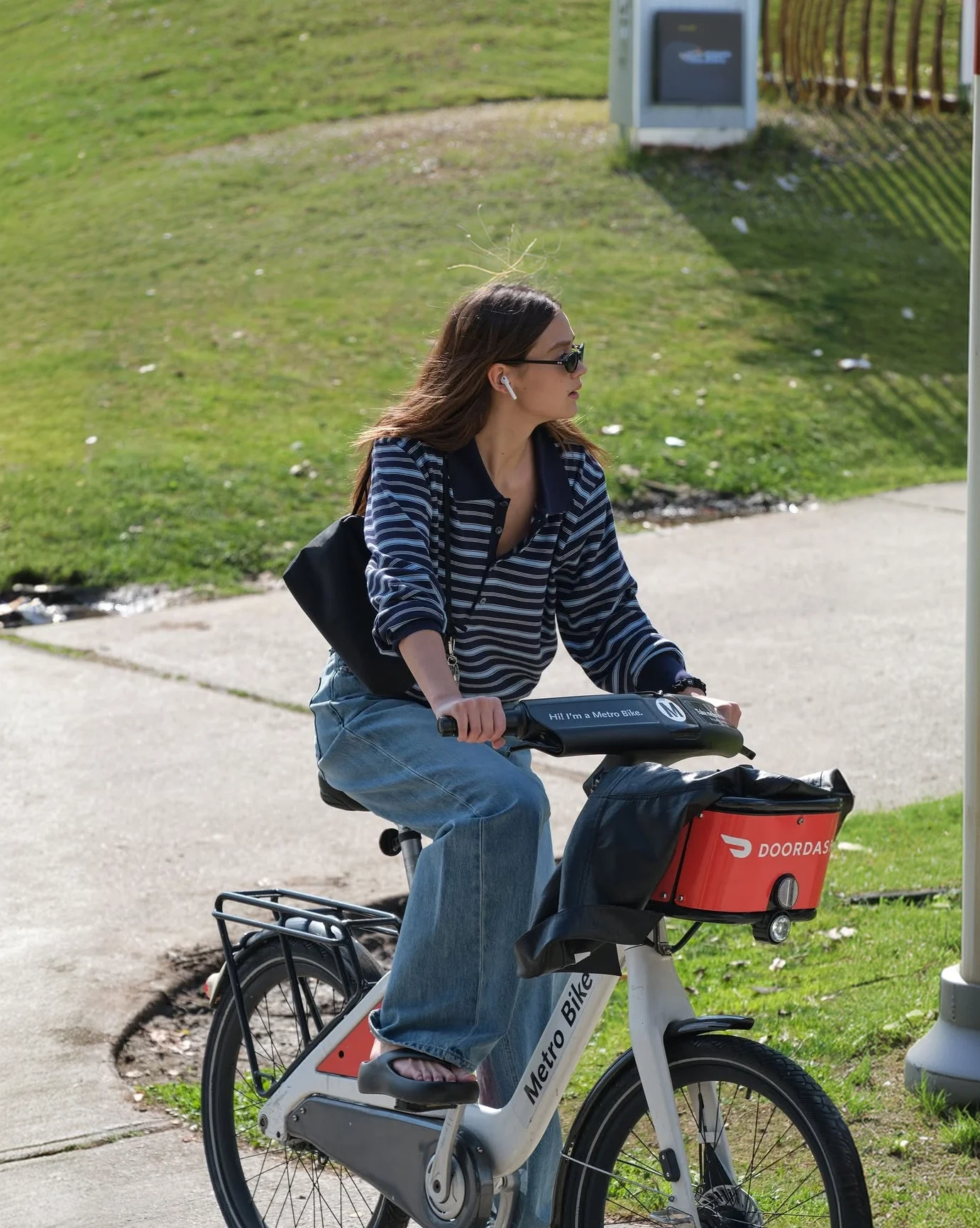
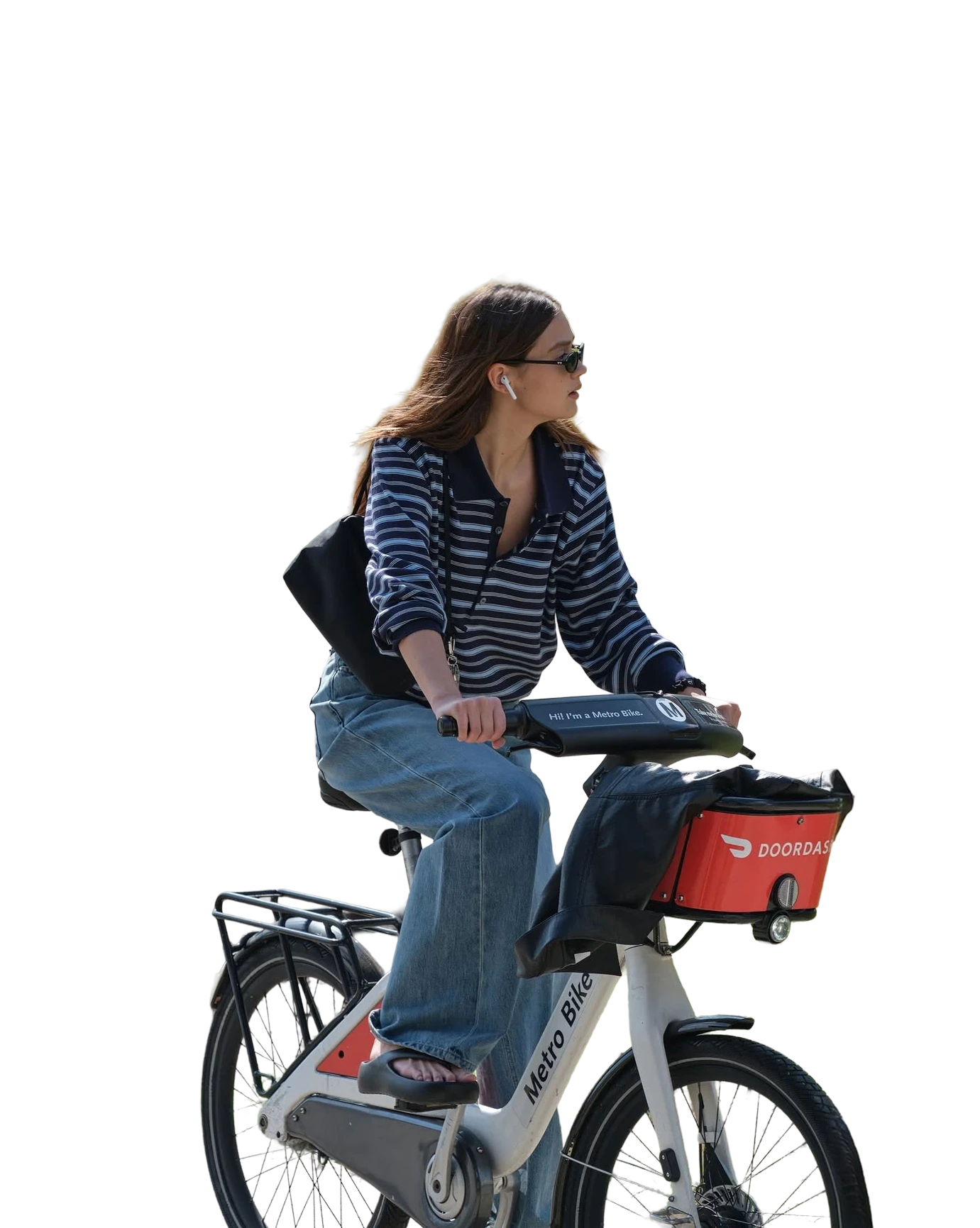
abans de sopar? La Maria fa
seva mitja hora
la ciutat.Bicing
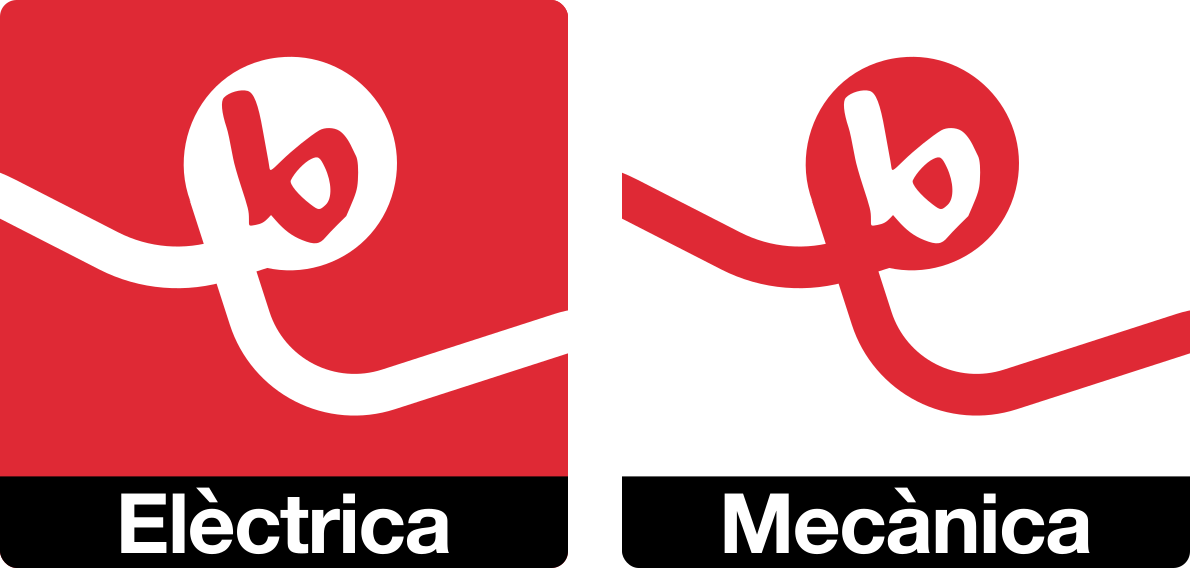
Elèctrica and Mecànica, the two bikes a rider chooses between at the dock. The line carries across both.
What is unresolved
This was a two week course project, so there are no campaign results behind it. Three things would need answering before it went any further.
- The stop and time format was designed on a screen. A bus shelter gets about two seconds.
- Bus, metro and Bicing all lead with red. The campaign may need a second identifier to stay recognisably Bicing.
- Nothing here has been tested with the audience it describes.